
Choosing the Right ORM for Your FastAPI Project
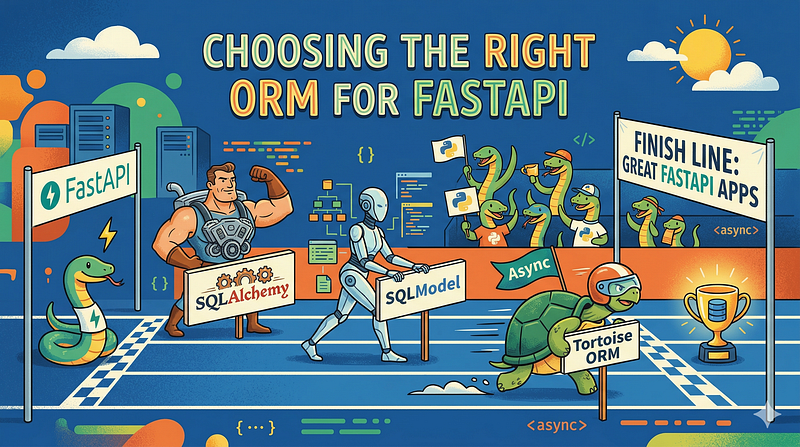
FastAPI is a high-performance framework based on Python type hints, but unlike many other frameworks, it does not come with a built-in ORM. Selecting the right database toolkit is essential for balancing performance with developer productivity.
SQLAlchemy: The Powerful but Complex Veteran
SQLAlchemy is widely considered the industry standard. It is a comprehensive “Python SQL Toolkit” that provides the full power and flexibility of SQL. However, this maturity comes with a steep learning curve. The library is designed with enterprise-level persistence patterns that can be overly complex for a straightforward workflow. For many, the main issue is that there are too many ways of doing the same thing, leading to confusion when tutorials or documentation offer differing parameters as defaults.
SQLModel: The Familiar Sibling with Limited Reach
SQLModel was created by the same author as FastAPI to reduce code duplication. It acts as a thin layer on top of SQLAlchemy and Pydantic, allowing a single class to serve as both a database table and a data validation model. While its design is intuitive and compatible with FastAPI, it is currently very basic and lacks a lot of functionality. This feature gap can make it hard to use for complex applications or projects requiring intricate table relationships.
Tortoise ORM: The Feature-Rich, Async-First Choice
Tortoise ORM is a modern, async-first ORM built from the ground up for the asyncio ecosystem. Inspired by the Django ORM, it provides a "clean, familiar Python interface" that is highly intuitive for many developers. Despite its lightweight feel, it is feature-rich, supporting ForeignKeyField, ManyToManyField, transactions, and a comprehensive Query API. For developers wanting a balance of feature completeness and an easy-to-use async interface, Tortoise is the premier choice.
Implementation: Building an Author & Book Relationship
Below are examples of how to define a one-to-many relationship where an Author can have multiple Books.
1. SQLAlchemy Example
SQLAlchemy uses explicit table mapping and relationship definitions.
from sqlalchemy import Column, Integer, String, ForeignKey
from sqlalchemy.orm import relationship, DeclarativeBase
class Base(DeclarativeBase):
pass
class Author(Base):
    __tablename__ = "author"
    id = Column(Integer, primary_key=True)
    name = Column(String)
    # Explicit relationship mapping
    books = relationship("Book", back_populates="author")
class Book(Base):
    __tablename__ = "book"
    id = Column(Integer, primary_key=True)
    title = Column(String)
    author_id = Column(Integer, ForeignKey("author.id"))
    author = relationship("Author", back_populates="books")
2. SQLModel Example
SQLModel combines the database table and Pydantic model into a single class.
from typing import List, Optional
from sqlmodel import Field, Relationship, SQLModel
class Author(SQLModel, table=True):
id: Optional[int] = Field(default=None, primary_key=True)
name: str
# Relationship attribute
books: List["Book"] = Relationship(back_populates="author")
class Book(SQLModel, table=True):
    id: Optional[int] = Field(default=None, primary_key=True)
    title: str
    author_id: int = Field(foreign_key="author.id")
    author: Optional[Author] = Relationship(back_populates="books")
3. Tortoise ORM Example
Tortoise uses a declarative syntax that feels familiar and concise.
from tortoise import fields, modelsclass Author(models.Model):
id = fields.IntField(pk=True)
name = fields.CharField(max_length=255)
class Book(models.Model):
    id = fields.IntField(pk=True)
    title = fields.CharField(max_length=255)
    # Simple ForeignKey definition inspired by Django
    author = fields.ForeignKeyField("models.Author", related_name="books")
Integration: Connecting to FastAPI
SQLAlchemy & SQLModel
These libraries typically integrate via FastAPI’s Dependency Injection system. You create a session generator that “yields” a database session for each request.
# Standard dependency injection for SQLModel/SQLAlchemy
def get_session():
    with Session(engine) as session:
        yield session
@app.post("/authors/")
def create_author(author: Author, session: Session = Depends(get_session)):
session.add(author)
session.commit()
return authorTortoise ORM
Tortoise provides a dedicated FastAPI interface class via register_tortoise. This helper handles the database lifecycle, automatic schema generation, and exception handling in one step.
from tortoise.contrib.fastapi import register_tortoise# Streamlined registration in main.py
register_tortoise(
app,
db_url="sqlite://:memory:",
modules={"models": ["models"]},
generate_schemas=True, # Automatically creates tables
add_exception_handlers=True,
)
Conclusion
While SQLAlchemy offers enterprise maturity and SQLModel offers proximity to the core FastAPI author, Tortoise ORM provides the most comfortable, feature-rich, and async-native experience. It allows you to build features quickly without having to “twist the libraries” to fit your needs.
— — — — — — — — — — — — — — — — — — — — — — — — — — — — — — — — — — — — —
Author: Marc Nealer Contact: Email Marc Nealer | Work with me on Upwork